The approach adopted varies depending on the specific needs and objectives of different Programmes and Projects. The implementation and intervention frameworks applied have been developed and piloted to work within schools that are functioning across different educational contexts and ensure cost-effectiveness and sustainability to cater to the specific needs of both well-resourced and poorly-resourced schools
Implementation Framework
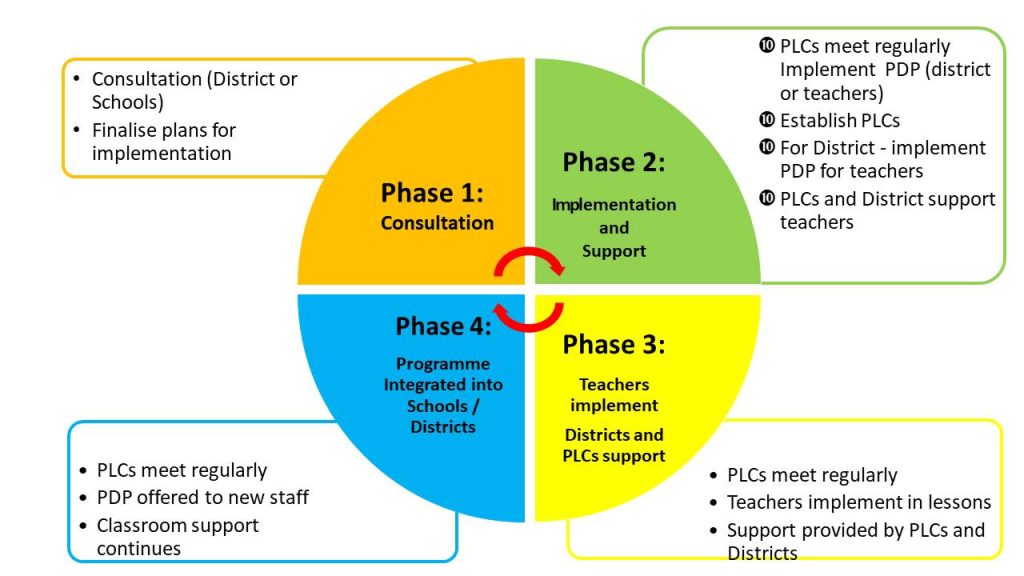
The implementation framework for scaling up programmes is based on four-phases as noted in Figure 1. Across all phases a specific monitoring and evaluation components are also catered for.
Intervention Framework
Overview of the ReMAPS Model
Workshops – develop new knowledge and skills
Classroom – practice knowledge and skills
Overview of the Intervention Framework
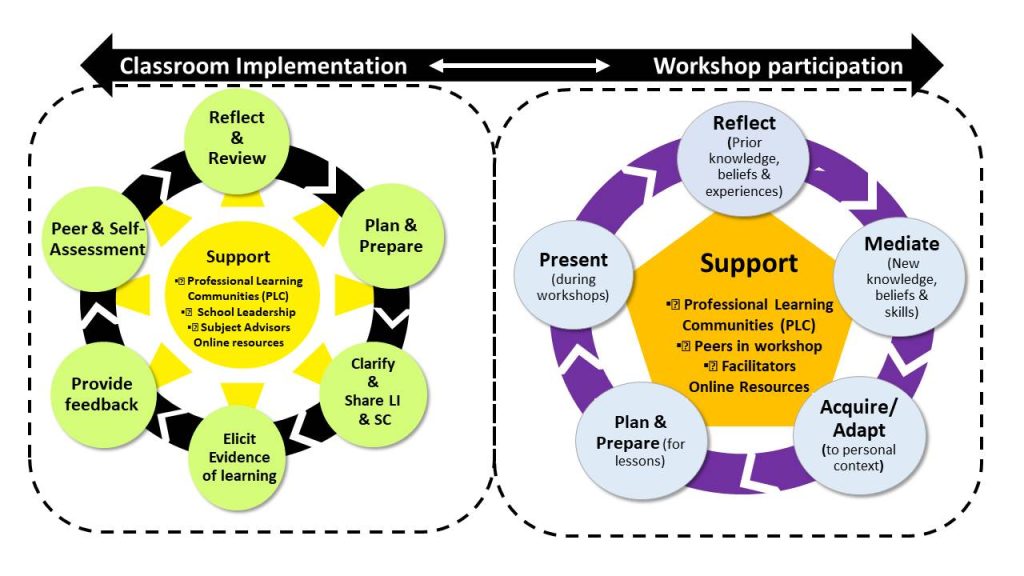
The intervention framework is based on the ReMAPS model (Figure 2), which is takes a cyclical approach that (i) begins with workshops where participants collaborate to develop and acquire new knowledge, understanding and skills with facilitators and each other; and (ii) include application where participants apply their new knowledge, understanding and skill in the classroom setting. The model comprises the following key activities applied in the process of developing new knowledge and skills:
Reflect on their current knowledge and skills,
Mediate new knowledge and understanding during the workshops,
Adapt this new knowledge and skills to their specific contexts,
Plan and prepare for implementation and
Present/Practice their newly acquired FA skills in the classroom
Support from professional learning communities, peers, facilitators, and online sessions underpins all activities.
Menu
Categories
Set your categories menu in Theme Settings -> Header -> Menu -> Mobile menu (categories)